

Underwater Photography News, Reviews and Trip Reports from Optical Ocean Sales.
Tuesday, June 30, 2015
Hot Summer Deals from Olympus!
Our New Emailer is Out! Unreal Olympus deals! E-M1 body $100 off! New TG4 Camera (now with RAW) $30 off! Most all
Olympus lenses on sale at great prices! We have a large selection of housings and systems to round out your new system!


Monday, June 8, 2015

Sunday, May 31, 2015
Don't Scratch the Octopus Between the Eyes!
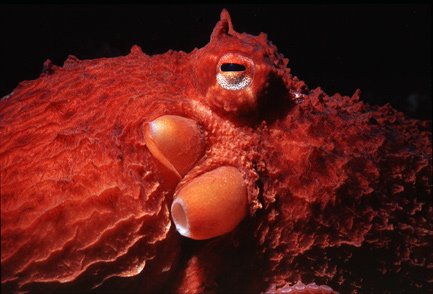 Note: this is an older story, but a good one, from an encounter a few of years ago...
My good friend Doc Kay has been busy retaking his diving medicine boards, family, and like, and readily agreed to my suggestion we take the good boat Komokwa (a beautiful Carver 37’) out for some scuba diving recently.
Seven of us showed up at 8:30 am; Ed Kay, Randy Williams and Randi Weinstein, Steve Lacey, Paul Riggs, my girlfriend and myself. After loading the usual ton of gear, we got underway and through the locks quickly.
Reaching Blakely Rocks, the tide was starting to slack, so we got ready to dive taking a while for each buddy pair to get dressed and into the water. Going down the buoy line we ran into stronger than expected currents and poor visability, maybe 15' or so. I gave my girlfriend the 10-cent tour, taking her to the wolf eel den, where they surprised us with a large egg mass that they were tending. We enjoyed some of the small anemones, sponge and nudibranchs as we went back over the top of the ridge to go back down the slope to the deeper part of the dive. We reached 70' or so and started to swim through the boulder garden down there and look for other critters. Swimming along, I saw one of the boulders had eyes.
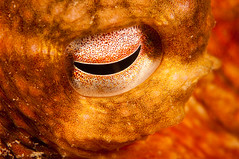
Huh? Yup, we did a double take. Here was one of the largest Giant Pacific Octopus I had ever seen, out in the open, sitting on a rock, blending into it with a brown and white mottling. It was just humongous, with a head about 2.5 basketballs large. It was about the size of my girlfriend and when it stretched out its arms to examine us, it was probably 12-15' arm to arm and least 80-100#. And it was in no way scared. Quite the opposite, it was looking at us to be food or a sexual partner.
 We
shook hands with it and we started to examine each other. Even with us
both hitting the Octo with our powerful HID lights, it was just curious.
It was pretty aggressive and we kept backing off and then petting it
when it turned its attention on the other diver. It tried to put an arm
over my friend's mask and she wasn't too happy with that idea, nor was I
when it grabbed my gauge console. My friend got on the other side of me, as I
cavalierly patted it on the head and scratched it between the eyes.
Well, my cats like it…
We
shook hands with it and we started to examine each other. Even with us
both hitting the Octo with our powerful HID lights, it was just curious.
It was pretty aggressive and we kept backing off and then petting it
when it turned its attention on the other diver. It tried to put an arm
over my friend's mask and she wasn't too happy with that idea, nor was I
when it grabbed my gauge console. My friend got on the other side of me, as I
cavalierly patted it on the head and scratched it between the eyes.
Well, my cats like it…Note: DO NOT DO THIS TO 100#, 15' MOLLUSKS WITH 8 ARMS.
It had had enough of me playing with it, and suddenly flew up vertically so that all I was seeing was 15' feet of suckers and mouth flying at me. I'm not sure quite what I did, sort of a twisting, backwards half gainer. The Octo then swam off with a spurt and landed on a rock and glared at us in the gloom. We also had had enough, and swam the heck back up the slope. After circling around a bit (and seeing another Octo way back in the middle of a rock (where they should be), we spotted Randy and the others and found the buoy line, about an hour's dive to 70' max. This was certainly one of the most aggressive encounters I have had with these magnificent creatures. They usually are timid, or curious, but not aggressive.
Another great day on, and under, the water in Puget Sound.
Wednesday, May 27, 2015
New Olympus 8mm & 7-14mm Lenses: Will They Fit Your Housing?
 First Look at these Exciting New Olympus Wide Angle Lenses for Underwater Photography.
Update: Please see our updated port guide here.
We had a chance to take a quick look at the new Olympus M.Zuiko ED 8mm F1.8 Fisheye ($999) and Olympus M.Zuiko ED 7-14mm f2.8 ($1299) PRO lenses yesterday in the store.
These beauties look to set a new standard in micro-four thirds lenses for underwater use. They are part of the new Olympus PRO line that started with the mz12-40mm PRO lens last year, that are dust, water and weather-sealed with all-metal mounts. No, you can't them underwater without a housing, but they will easily withstand wet hands, rain, dust, cold (to 14F) and humidity. These are extremely well-built and have a rugged design, with very low chromatic aberration.
Physically, the Pro series are very smooth and easy-to-use as compared to some of Olympus's earlier light-weight lenses in plastic mounts that sometimes bound a little. They are larger and not the size of those smaller self-storing "pocket" lenses. But the trade off is worth it. Compared to the Panasonic equivalent lenses, these lenses are much faster and should be quite a bit sharper.
But what difference does a fast lens make if you're stopping down while using strobes anyway? Auto focus speed is probably the biggest reason, especially with contrast autofocus bodies like most m4/3rds cameras, with the ability to use available light for larger scenes placing a solid second.
 The 8mm is the first 8mm FE that is an extremely fast f/1.8 - twice as fast as the Panasonic 8mm FE f/3/5. That should make it ideal for ultra wide angle interior shots of caves and wrecks as well as the perfect freediving lens.
  In fact, Olympus is specifically marketing this lens for use with it's E-M5 and E-M1 housings by also releasing a glass dome port to accompany the 8mm. The lens is about 30mm longer than the small 8mm f3.5 Panasonic lens (you have to have a way to gather that low light somehow) so in a Nauticam housing a 20mm extension should do the trick, although it even physically fit in the dome with a 20mm. With no zoom gear to wait on, this lens will be ready to get wet the moment it's released the end of June.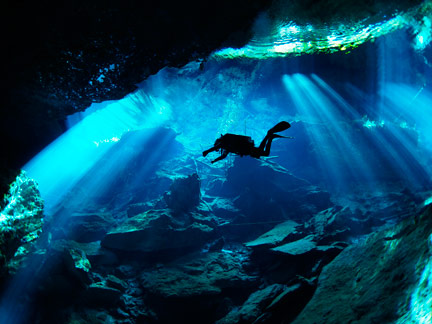
The new Olympus f/2.8 7-14mm PRO has a much larger diameter than the 12-40mm and is longer too, really the largest m4/3rds wide angle lens we've seen. It will not fit present (85mm) m4/3rds diameter ports like the Zen 170mm Mark II dome. We think it really will be the go-to lens for underwater video on the Panasonic GH4 as it has a unique MSC (Movie-Still Compatible) mechanism, which provides swift, nearly silent autofocus operation, with no "whirr" of an AF motor. It also has a programmable function button on the lens, although we doubt that Nauticam will design a button to access it.
With a much more advanced optical design, the lens should hopefully have much better corner sharpness than the 4 year old Panasonic lens, but only in-water testing will tell the tale. Olympus however has no port or plans to support it for underwater use, leaving third-party manufacturers like Nauticam, Aquatica, Zen, Athena and others to design underwater solutions.

All-in-all these new lenses really add a lot to the high-end capabilities of all m4/3rds cameras like the Olympus OM-D E-M1 and Panasonic GH4. We look forward to taking them diving!
Tuesday, April 28, 2015
New Handbook: Basics of Underwater Macro Photography

Macro photography allows photographers to get in close, reducing the amount of water between the camera and subject; bringing out color, sharpness and details in photos.
To help you get better shots and an understanding of macro photography, I've created a new Handbook in the Resource Center "Basics of Underwater Macro Photography. It contains basic information, starting settings,lighting, equipment and techniques to help you get some great shots! http://bit.ly/UW-Macro-Handbook
Tuesday, April 21, 2015
Beyond Here There Be Dragons: Komodo Island Photo Expedition, Jan. 28-Feb. 8, 2017


Upwelling of nutrient-rich water from deeper areas of the archipelago is responsible for the rich reef ecosystem. The variety of marine life that you can see in Komodo rivals any of the world’s best dive destinations.
From sunfish, mantas, dolphins, sharks and eagle rays to pygmy seahorses, ornate ghost pipefish, clown frogfish, nudibranchs and blue-ringed octopus, all are at home amongst a spectacular range of colorful sponges, sea squirts, tunicates and corals; Komodo is an underwater photographer’s heaven!
 In Jan/February, there are generally less than ideal conditions up north, but good conditions in the south. Horseshoe Bay, a favorite spot, is cold in the summer - in the 60’s at times. But in the winter, it’s bluer, clearer, and warmer - getting into the 80’s. Other liveaboards have moved east to Raja Ampat, so it tends to be less crowded. This charter is a repositioning cruise, as the boat leaves the Komodo area and goes to Flores Island. Although 11 days in length, we are only being charged for 10! Access is good from both ports; easy non-stop flights from Bali.
MV Damai I
This beautifully designed wooden boat been designed to offer a personal luxury service that only a vessel of this size that is dedicated to small groups can provide.

Specifically designed for divers, the vessel offers large dive stations with individual rinse tanks and a camera room with separate camera work stations with integrated charging stations for each photographer. The vessel offers a divemaster/guide to customer ratio of 4 to 1, ensuring the best service underwater as well as onboard.
 Your trip leader Jack Connick from Optical Ocean Sales will be available to help you with presentations on subjects ranging from strobe positioning to Photoshop Lightroom.
 Prices: Single Cabins (1-2 spaces available): $7350 — Twin Share Cabins (3-4 spaces available): $5600
Note: The boat is more than half full and cabins (5, 6, 7) are booked.
Included in the Package:
- 12 Days/11 Nights on board the Damai I Liveaboard
- 4 dives a day offered
- Photo presentations & assistance
- All meals served in a fine dining environment
- Beer, drinks and 1 glass of wine each night onboard
- Airport transfers to/from boat
For more information please see our website listing or call us.
More on the Damai 1 Liveaboard Here.
Take a 360° Photo Tour Here.
Download a trip flyer Here.
Friday, April 3, 2015
Review: Saga Dive Fiber Optic Ring Flash Adapter for Underwater DSLR Cameras

Due to the magnification involved, macro photos can consume a lot of light. Underwater photographers have long struggled to get their camera housings with two strobes into tight spaces, or get the lights positioned close enough to the front of the lens without creating lens flare or shadows from the port.
Ring lights take care of many of these difficulties, and while a bit bulkier they are fast and easy to shoot with.
Until now there haven’t been many choices. Athena Industries produced a ring flash for a while, although it’s been pulled off the market now. It had a large ring strobe light unit, power unit, electrical sync cord and needed adapters to fit ports. Thus it was a good, but somewhat heavy, bulky and expensive system. It also would not work with electrically synced cameras, as it used a re-worked Sea & Sea YS-01 strobe as the “power unit” that need a fiber optic cord to fire.
 Saga Dive Fiber Optic Ring Flash uses fiber optic technology, this is an add-on to existing strobes that transfers the strobe light output through a parallel series of fiber optic cords held in place around the front of the port. One advantage is that the fiber optics at the front of the port are much smaller in diameter and lighter than other ring lights with dedicated large, round flash units.
The light from the Saga flash adapter is very even. Light was bright and even on the subject and rapidly tapered off in the background, creating nice bokeh, or a black background. Ring lighting is very even, so if you want more creative lighting solution, you’re better off sticking with standard strobe setups, there's not much you can adjust on the ring flash.
TTL is the preferred shooting method, and my Sea & Sea YS-D1 strobe and D800 Nauticam housing worked very well and easily. Finding the subject at great magnification became the hardest part; I knew the lighting would be perfect, or at best I’d dial the EV up or down on the strobe with one click of the dial.
The Saga Ring Light also has an adjustable collar that allows you to pull or push the ends of the fiber optic cords in and out, thus focusing the light narrower or wider, and allowing for different lengths of diopter lenses. It actually also can be used to give slightly more or less light on a subject as well.

I flipped the strobe cover over on the fiber optic taking them out plugging them back. Then I mounted the strobe directly onto the left handle ball mount with a clamp. This freed up the focus light holder, and also mounted the unit out of the way of looking over the housing at the subject. The fiber optic cords are at a slight angle, but I was still able to adjust them in and out without difficulty or creating strain on them. One other note was that I found the strobe cap to be very slightly loose on the front of the strobe, but a single wrap of gaffer tape created a little “stiction to hold it firmly in place.
They also sell it with a flip holder for a 67mm macro diopter, and if you want to use a flip holder that is the only answer – the popular Nauticam flip diopter holder doesn’t fit.
I decided to buy my demo unit with no holder, figuring I’d be shooting with my 105VR Nikon lens with a ReefNet SubSee +5 or Nauticam Super Macro Converter all the time. But in practice, flip holders are a nice adaption, and several times I wish I had the choice of taking the diopter off as you can then refocus the ring light wider.
 Shooting was very easy, but you are limited to shooting tight macro. Usually with my normal macro setup I can flip up the diopter and shoot fish “portraits”, or larger objects farther away. My dive buddy tried it on his Nauticam 7DMKII, but also mounted a second strobe off to the side; not a bad idea to have more flexibility, at the cost of a larger unit.
Mounting it off to the side, you also loose the ability to add arm floatation. I found the Stix FB-AQ float belt to fit well, and this added quite a bit of flotation to balance the rig nicely.
I found it to be very durable; the fiber optic cords are quite stiff and won’t bend or break in normal use. You do have to be a little careful not to get too close to a sea fan and catch the fiber optic cords on them!
About the only negative to the Saga Ring Flash Adapter is that it is sort of bulky to pack. However, it’s light and fairly unbreakable, so I just wrapped it in a few layers of bubble wrap and t-shirts and stuck it in my dive bag.
Currently, they are shipping the DSLR model and a much smaller compact camera version. They are studying adapting that model for use with mirrorless cameras using the Olympus mz 60mm macro lens as well.

Prices are reasonable with the euro down; currently the DSLR model with a flip holder is $774.95, and the model without a holder $624.95. The smaller model for some compacts is $349.95. (These prices are subject to change with currency fluctuations.)
Friday, March 20, 2015
New FREE Handbooks Now Available: Choosing an UW Camera & Housing - Tips for Shooting Video
 We just published a NEW FREE Handbook for those wanting to get their
feet "wet" with Underwater Photography. Titled "Choosing an Underwater Camera & Housing", it goes over basic things to look for for on both
cameras and housings. Basic camera parts and their importance for underwater photography, classes of cameras, basic system configuration, housing considerations and materials, accessories and much more are covered.
We just published a NEW FREE Handbook for those wanting to get their
feet "wet" with Underwater Photography. Titled "Choosing an Underwater Camera & Housing", it goes over basic things to look for for on both
cameras and housings. Basic camera parts and their importance for underwater photography, classes of cameras, basic system configuration, housing considerations and materials, accessories and much more are covered.
See our Resource Center for many more Handbooks, articles, trip reports, spec charts and reviews!
Subscribe to:
Posts (Atom)