Tuesday, October 14, 2014

Free Olympus E-M1 V.2 Firmware Update - Try Out Some New Creative Underwater Techniques!

While at first glance Olympus's new free OM-D E-M1 camera firmware upgrade v2 doesn't appear to offer much for underwater photography, digging into some of it's subtleties and improvements shows that it offers some pretty interesting ideas to expand your underwater universe.

The features added include most all of the latest ones now found on the new PEN E-PL7. It's not often that you can apply these types of upgrades to a camera that's nearly a year old.

Besides some improvements such as speeding up it's EVF display, more and smaller AF points, and improved focus peaking, there are a lot of new in-camera creative possibilities available such as using Keystone Correction to straighten the lines of a wreck, or maybe stalks of kelp, while shooting with a fisheye lens - right on the camera back. Same with it's Live Composite Tool; allowing for multiple exposures to be made creatively without post-processing. Other cool effects like Partial Color are now available, allowing you to shoot a brightly colored subject against a black and white background.

Do you like HDR? This popular technique of shooting and overlaying multiple varying exposures (now with exposure compensation) can be set-up and shot right on the camera. Using a high-frame rate, these HDR composites can be previewed on the camera display and then saved into RAW for further manipulation later.

Updates have also been made to the wireless apps and tethering software, along with many other features you'll enjoy using above water. You can also use them to apply filters and create composite "stories"  and upload them with your phone; without even opening your housing!

If you have one of these great Olympus micro-four thirds cameras, getting this free E-M1 firmware update is a no-brainer. It is easily downloaded onto a computer, then uploaded to the camera with the mini-usb cable included with the camera.

So enjoy this cool new present from Olympus and think creatively underwater, you might be surprised!


More information on the OM-D EM1 can be found here. You can download the updater here.

Here's a complete list of new features and changes:

8 New Functions:
  • Keystone Compensation (Digital Shift)
  • Tethered Shooting System (OLYMPUS capture)
  • Live Composite
  • Zoom In/Out and Layout have been added to Photo Story. Save (complete partway through), Temporary Save, and Resume functions have been added to Photo Story mode
  • New Art Filters: Vintage and Partial color
  • Old Film Effect in video recording
  • The Aperture Lock function has been added to Aperture Preview
  • The Panning Shot shooting mode has been added to SCN mode
16 Operability Improvements:
  • Image display time lag in the Electronic Viewfiner has been improved to 16 msec (frame rate setting is high speed)
  • Multiple simultaneous settings now available in Live Guide
  • Exposure compensation (±3 EV) is now available in HDR 1/HDR2 shooting
  • A function has been added to cancel Color Creator and return to the original Picture Mode by pressing the MENU button when using Color Creator function.
  • Movie Tele-converter can now be used simultaneously when Art Filter is set to Picture Mode.
  • AF function for each frame was added to Custom Self Timer. In Drive Mode's Custom Self Timer settings, you can now press the INFO button to change settings.
  • MF Assist is now supported in magnified frame position.
  • 3x has been added to high resolution magnified Live View.
  • The Peaking display frame rate has been improved.
  • Electronic zoom speed setting function was added. An icon appears on the LCD monitor when using an Olympus electronic zoom lens.
  • When the arrow pad is set to Direct function, the Underwater/Underwater macro functions can be used with the left and down button on the arrow pad.
  • Double tap is now supported in touch operations on the Super Control Panel.
  • The level gauge and histogram can now be displayed during magnified frame display. The Touch Off icon was added to magnified frame display.
  • A function was added so that shooting information recorded in HDR1/HDR2 can be viewed in the playback screen.
  • Information on composited number of shots for images recorded with Live Composite was added (Can be checked in Olympus Viewer3).
  • When the BKT button is held down, the BKT menu now appears.

Wednesday, October 1, 2014

New Nauticam NA-5DMKIII Housing DEEP version - rated to 500!

The current Nauticam product line is designed to function flawlessly at depths up to 100m.  This supports the majority of recreational and technical divers, but cutting edge exploration teams are pushing further. NA-5DMKIII Deep, with its 150m depth rating, will fast become the tool of choice for documenting these expeditions.

The NA-5DMKIII Deep is designed to go way beyond conventional depths. This housing is rated to 150m (500ft), 50% deeper than the standard housing. The pressure at this depth is an astonishing 16 times the pressure we feel at sea level. Nauticam engineers have increased the wall thickness of the housing to make it more rigid, and to reduce the kind of torsion that cause controls to bind or fail. Each control has been carefully upgraded in terms of strength to function under the increased pressure, and the two command dials got special attention with a proprietary process to maintain ease of operation at depth.

This housing is functionally the same as it's sibling, the NA-5DMKIII. It is slightly heavier due to the additional thickness of the housing walls, but the difference is barely noticeable. It features the same magical ergonomics that have made the Nauticam 5D Mark III housing one of the most popular housings among professional underwater image makers. 

For those few that want to go there, the NA-5DMKIII Deep stands ready to go deep. Very deep.

Here's a video of a test dive to 500' with the new housing.

NA-5DMKIII DEEP Test Dive to 500ft from Christopher Parsons on Vimeo.

Thursday, September 25, 2014

Underwater Shooters Looking Forward to New Sony a7 FE Mount Wide Angle and Macro Lenses

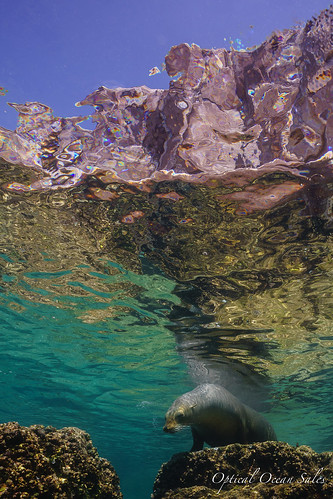
Sea LionUnderwater photographers who travel and want a pro-level camera have been stuck with much larger, heavier full-frame DSLR camera systems. The choice was to compromise quality and capability for smaller size mirrorless cameras, or just deal with the extra weight, bulk and travel expense. In these days of add-on airline fees, this situation has been getting worse.

Earlier this year Sony changed all that with the release of the Sony a7 full-frame mirrorless camera. This is truely a game changing platform.

As I stated earlier in my review of this camera, the Sony a7 series are light, fast, incredibly customizable, and with a great sensor. The release of the high resolution a7r and the 4k capable a7s further reinforced this great lineup.

But they have very few lenses available for the their new FE lens mount. For some reason Sony seems to come out with a new mount every time they come out with an SLR. Alpha lenses don't fit. Of course they have adapters, but those are usually slow and the resulting lens stack won't fit underwater housings. And the price adds up.

The missing lenses for underwater photography are (surprise) macro and extreme wide angle. 

Sony has recently posted the 2015 roadmap of new lenses for their FE mount that fits the a7 series. 

The good news on this front is that starting mid-next year Sony/Zeiss will ship a 90mm macro lens (still not as powerful as I'd like to see for FX) and a 28mm wide angle with FE and W/A adapters - not a great solution, but a better option than the 35mm they have now. The venerable Nikonos 15mmFE manual lens probably still remains the underwater wide angle lens of choice for the Nauticam NA-7 housing. Hopefully Sigma and some others will jump into this FE mount vacuum soon.

Here's a quote from a Sony executive from dpreview: 
"...There are 13 lenses for the E mount currently but we still need to create more lenses to compete with other manufacturers. We’re catching up. One consistent request from our customers is macro lenses and wide-aperture lenses...."

The promise of a lighter, smaller, electronic full-frame SLR camera system is slowly being realized. In the meanwhile, I'll still be shooting my Nikon, with decades of glass available. 

Sony a7 Lenses

Tuesday, September 23, 2014

Nautipus? Olympicam? Join Us for Experts Day Nov. 15th!

November 15th, 2014 - 9am-5pm  
Olympus Imaging/NauticamUSA Experts Day! 
 
Optical Ocean Sales is proud to sponsor an exciting opportunity for you to see the latest products from these leading underwater photo/video imaging and travel companies. Timed right before this year’s DEMA Show, they promise to show off some of their latest developments.

Featuring Representatives:
Chris Parsons, NauticamUSA - Keldan - Fisheye Fix - Zen
Steve Ball, Olympus Imaging America
Donna Lattin, owner, South Pacific Island Travel
 
It’s your chance to come in and get your questions answered about using these great products, learn tips and tricks from Olympus and Nauticam, as well as get help and advice from the friendly Optical Ocean Sales staff. We will also have some staff presentations on underwater photography.

 Donna Lattin from South Pacific Island Travel will be available to answer questions about our upcoming Photo Expedition to the Red Sea and other exotic destinations. There will be food, give-aways, deals and lots of fun and excitement to enjoy!

Optical Ocean Sales, LLC
1800 Westlake Ave. N., Suite 201
Seattle, WA 98109
800-359-1295

Saturday, September 13, 2014

Check Out the FREE PNW Diver Magazine!

Pacific Northwest Diver | September, 2014
Download it free here

Photographers/Videographers: 
Richard Salas, Author & UW Photography Instructor: Santa Barbara, CA
Lisa Zazzi, Point & Shoot Photographer: Vancouver, BC
Bob Bailey, DSLR Photographer and Octo Architect: Federal Way, WA

Technical Corner- 
Optical Ocean Resource Center: Pamphlets: Starting Concepts, UW Lighting, Wide Angle, Composition, Maintenance Comparison Charts: Strobes and Lights

News Corner: Puget Sound Eelgrass

Operator: Salmon Safari, Campbell River, BC

Saturday, September 6, 2014

Check Out Our New E-Mailer!

Our new E-Mailer is out with lots of great info on our Resource Center, Raja Ampat Trip, New Systems and lots of great deals!

Check it out here!
Subscribe here so you don't miss the next issue!

Reefs in Texas - Yee Ha!

Trip Report - Flower Garden Banks National Marine Sanctuary - July 2014 - By David Todd

Recently I had a chance to dive on some of the healthiest coral reefs in the world off the coast of Galveston, Texas in the Gulf of Mexico.

The Gulf is not known for it’s pristine waters. With two-thirds of the US draining into it, it tends to be muddy, filled with oil and gas platforms and wouldn’t be most people’s first choice when searching for a dive destination.

Those folks are missing out.

The Flower Garden Banks National Marine Sanctuary, one of thirteen Marine Sanctuaries administered by NOAA, contains 350 acres of some of the healthiest coral reefs in the world, with up to 55% live coral coverage. To put this in perspective, the coral coverage in the Caribbean averages in the teen percentages.

The reefs at Flower Garden and Stetson Banks are the Northern-most tropical reefs in the continental US and are part of the US’s National Marine Sanctuary system. The nearest tropical reefs are 400 miles south in Mexico.

Since they range from 80 to 110 miles offshore, they don’t get a lot of traffic from divers, in fact there is only one regularly scheduled live-aboard that services the area. Leaving from Freeport, Texas, about an hour from Galveston, The MV Fling holds and up to thirty divers and does two and three day trips to introduce folks to the “Texas Caribbean.”

You board at night and the vessel steams through the night to get out to these gorgeous reefs.
This trip is not for the faint of heart. It is somewhat advanced diving, both because of the depth of the reefs, average 65-75 feet for the top of the reefs and the variable strong currents that can occur at the bottom, mid water and at the surface.

Water entrances and exits are somewhat athletic, with a 6-foot giant stride entry and a trailing line exit to the ladder that can feel like a bit of a Nantucket Sleigh Ride when the surface currents are up. Also the dive masters on this boat are very thorough in their safety and site briefing, but they do not accompany you on your dives. You will want to be comfortable in your abilities to dive there.

Winter is the time for schooling Hammerheads and occasional Tiger sharks, but during our summer visit we were treated to Mantas and a school of 7 30+-foot Whale Sharks. Great Barracudas and large jacks accompanied us on every dive, sometimes in schools of over 100 fish.

In general, the Flower Garden Banks reefs are large colonies of coral of 25 different species, populated with large snapper, masses of Creolefish and grunts and an occasional Spotted Drum and other exotics as well as a host of gulf invertebrates from huge sponges to slate pencil urchins.

Stetson’s rocky terrain is often described as a moonscape; It’s upswept rocky ridges are home to large schools of Vermillion Snapper, Queen Conchs, the rare Golden version of the Spotted Trunkfish and a resident Sandbar shark, that we were lucky enough to watch in hunting mode.

Night dives at Stetson were equally as fascinating as the day, with all of the nocturnal animals like Beaded Sea Cucumbers, sea urchins, Slipper Lobsters and decorator crabs foraging over the reef while the day fish slept. We had to take care to not spotlight the sleeping fish in order to keep them safe from the hungry jacks that opportunistically use divers lights as a hunting tool.

In addition to the Flower Garden Banks and Stetson Banks, most trips also dive on an oil platform or two. This is truly a spectacular experience, as these massive steel structures form artificial reefs and are teaming with life, from tiny macro critters like blennies and gobies, bizarre alien fish like the large scrawled filefish and cowfish to schools of large pelagics like jacks and sharks. In fact, we had a great several minute visit from a curious Silky Shark while hanging on our safety stop at Platform High Island 389 which is known as one of the top ten oil platform dives in the world.

Needless to say, there were amazing opportunities for photography and videography on this trip. From big animals to macro it was there. However, I was there on a biological survey trip with a group of marine educators and photography took back seat to our surveying activities.

I was able to shoot a bit of video in which you can get a glimpse of some of the life there.

 
Flower Garden Banks National Marine Sanctuary - Sony RX 100-II 60p Underwater Video
from Optical Ocean Sales on Vimeo.

I am looking forward to getting back to the Gardens for a winter trip and I will definitely take my camera on every dive next time!

Equipment Used:
  • Sony Rx100 - II
  • Sea and Sea MDX RX100 Housing
  • Fisheye Fix 2k Video Light
  • I-Das arms and Tray
Links:
Flower Garden Banks National Marine Sanctuary
Fling Charters

Wednesday, September 3, 2014

Sea of Cortez Sony a7 Underwater Video

We have a new video posted on Vimeo. Some various clips of whale sharks, bull sharks, wrecks, huge schools of fish and lots of fun from our June Photo Expedition on the Solmar V. Shot on the Sony a7 in a Nauticam USA housing with an old manual focus Nikonos 15mm FE lens. Viz was pretty challenging most of the time...and yeah, I mostly like to shoot stills...but this video thing is fun!

Sea of Cortez from Optical Ocean Sales on Vimeo.

Translate